7-Minute Self-Massage for Busy Days (No Tools Needed)
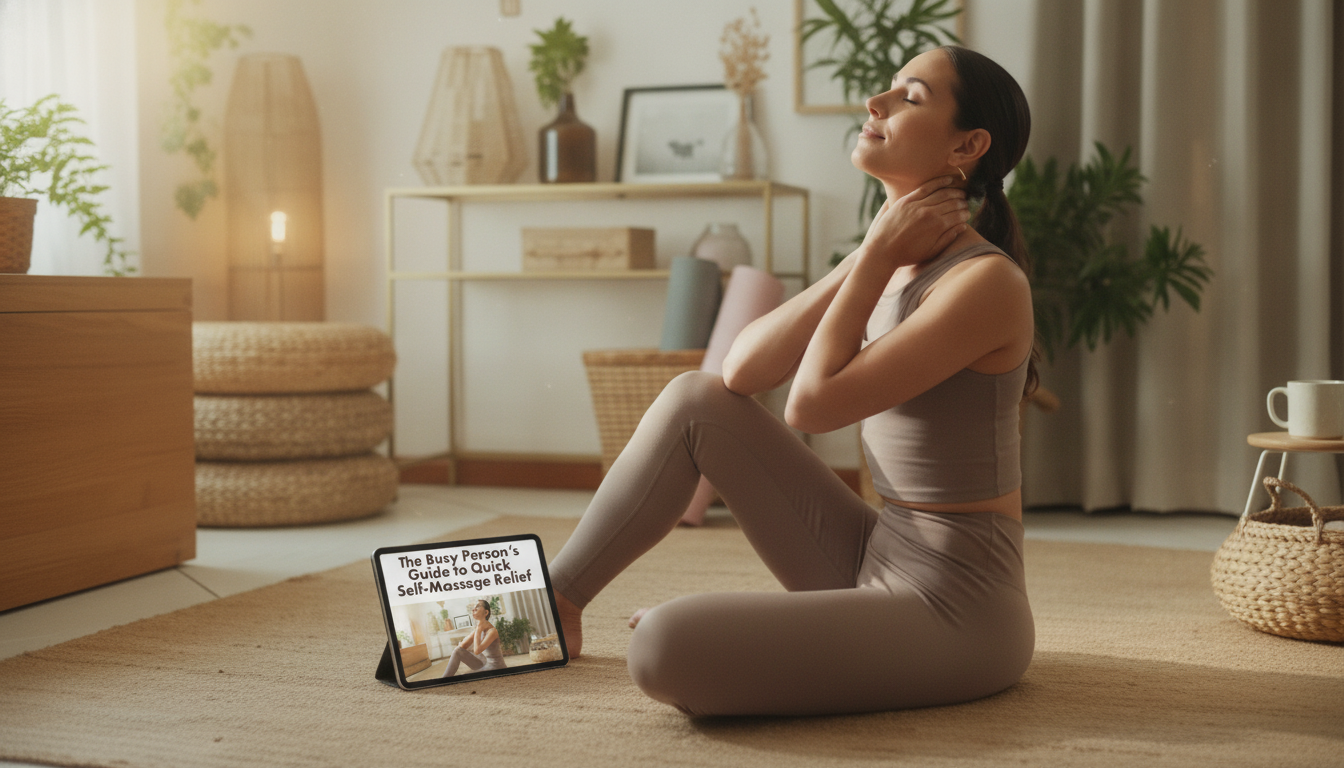
When quick self-massage helps most
Quick self-massage works best for everyday, “normal life” tension—especially when you catch it early and keep the pressure comfortable. It’s a practical choice when you don’t have time (or space) for a full stretching session, yet you want your body to feel a little more workable again.
- Short bursts of muscle tightness from desk work, commuting, or frequent phone use
- Post-workout soreness that feels like “tightness,” not sharp pain
- Stress-related jaw clenching and upper-back stiffness
- End-of-day leg fatigue from standing or long walks
- A midday reset when focus drops and shoulders creep upward
Massage therapy is commonly used for relaxation and to ease muscle tension. For a deeper overview of benefits and safety considerations, see the National Center for Complementary and Integrative Health (NCCIH) and Cleveland Clinic.
A 7-minute reset routine (no tools needed)
This routine is designed to be repeatable: short steps, simple hand positions, and clear time limits so you can fit it between calls, before a commute, or right after a long stretch of typing.
Step-by-step timing
- 00:00–01:00 Breathing + posture reset: feet grounded, shoulders down and back, slow inhale through the nose, longer exhale
- 01:00–02:30 Neck sides: gently pinch-and-release the upper trapezius (top of shoulder), then slow strokes downward toward the collarbone
- 02:30–04:00 Jaw + temples: small circles at the temples, then glide along the jawline with light pressure (avoid pressing directly into the throat)
- 04:00–05:30 Forearms/hands: thumb circles into the meaty part of the palm, then squeeze along forearm muscles from wrist toward elbow
- 05:30–07:00 Upper back: reach across to rub the shoulder blade area with knuckles or fingertips; finish with two slow shoulder rolls
| Area | Time | Pressure | What it should feel like |
|---|---|---|---|
| Breath + posture | 1 min | None | Looser ribs/shoulders, calmer pace |
| Neck/upper traps | 1.5 min | Light–medium | Warmth, softening, no tingling |
| Jaw/temples | 1.5 min | Light | Easing of clench, no sharp zaps |
| Hands/forearms | 1.5 min | Medium | Reduced tightness, better grip comfort |
| Upper back | 1.5 min | Medium | Broader movement, easier shoulder roll |
Pressure and pacing that work on busy schedules
The goal is to signal safety to the nervous system and improve comfort—not to “win” against a knot. Most people get better results from steady pressure and slower strokes than from aggressive digging.
- Use a 1–10 scale: aim for 4–6/10 intensity; discomfort should fade within seconds after releasing.
- Go slower than feels necessary: 3–5 seconds per stroke often beats rapid rubbing.
- Pair massage with the exhale: press or stroke during the exhale to reduce guarding.
- If it feels sharp or electric: reduce pressure, change angle, or move to nearby muscle tissue.
- Two short sessions help: a quick morning reset plus an afternoon reset often beats one longer session you never get to.
Targeted mini-routines for common tension zones
When time is tight, pick one zone and do a “micro-dose.” Stopping at the first sign of relief keeps the routine sustainable (and reduces the urge to overwork sore spots).
- Screen-time neck: 60 seconds per side on upper traps + 30 seconds gentle ear-to-shoulder stretch (no forcing).
- Lower back stiffness: rub along the muscles beside the spine (not on the spine), then add 5 slow hip hinges to reintroduce movement.
- Headache-prone tension: light circles at temples + gentle scalp rubbing; keep pressure low and avoid “digging.”
- Feet after long days: thumb strokes from heel toward ball of foot; finish with ankle circles.
- Shoulder-front tightness: gentle rub across the chest/pec area near the shoulder, then open/close the arms like a slow hug.
Quick add-ons: heat, cold, and simple tools
If you can add just one extra support, choose the one you’ll actually use. Consistency beats complexity.
For a broader look at massage benefits and how it can support stress management, Mayo Clinic has a helpful overview: Massage: Get in Touch With Its Many Benefits.
When to skip self-massage and get checked
A portable guide to keep the routine effortless
If you want a ready-to-follow format, The Busy Person’s Guide to Quick Self-Massage Relief (instant digital download) keeps the steps straightforward for on-the-go use.
Daily habits that make massage last longer
For a desk setup upgrade that can reduce hand and forearm strain over time, consider an Ergonomic Wireless Vertical Mouse for Apple—a small change that can make it easier to keep shoulders relaxed during long work blocks.
FAQ
How fast should self-massage feel like it’s working?
Many people notice warmth, easier movement, or a calmer feeling within 1–3 minutes, but stubborn tightness often improves more when you repeat short sessions over a week. Spend 2–5 minutes on one area and track whether your “baseline” tightness is gradually lower. Stop if pain becomes sharp or symptoms worsen.
Can quick self-massage help with desk-related neck and shoulder tension?
Yes—light-to-medium work on the upper traps, the shoulder blade area, and the chest/pec region can help, especially when paired with a brief posture reset and slow exhales. A simple micro-routine is 60 seconds per side on upper traps, 30 seconds rubbing the shoulder blade area, then two slow shoulder rolls.
Is it safe to self-massage every day?
For most people, daily self-massage is fine at light-to-medium intensity as long as you avoid bruising and don’t press on the front of the neck or directly on the spine. If you take blood thinners, have clot risk concerns, or notice unexplained swelling or warmth, check with a clinician before doing deeper pressure.















Leave a comment